.
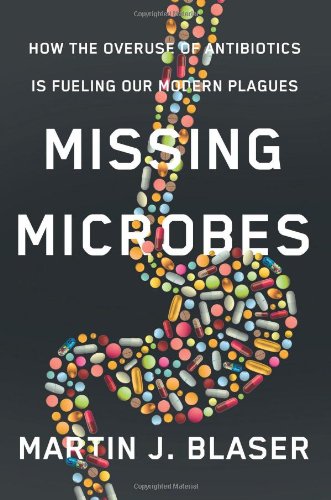
This is an interesting and scary book. We have to stop handing out antibiotics like they are candy on Halloween! There is clear and compelling evidence that antibiotics are seriously messing us up, and we don't even know in how many ways, at this point.
Nothing I read in this book is contradictory to what I learned in Human Microbiome class last fall.
A little knowledge is very dangerous, but that never seems to stop us humans from rushing ahead to change things around, as soon as we are able to do so.
So many of the things we are messing up have catastrophic potential.........
I recommend this book.
.
Showing posts with label Human Microbiome. Show all posts
Friday, January 16, 2015
Friday, November 28, 2014
November 20
.
On the 20th I had a doctor's appt. I'm not as good as I suppose I should be about annual checkups, but, luckily, all is well. (The older I get, the more likely I know it is that they will say something bad to me, and the harder it is to go in, I find.........)
After Health Service (after getting stabbed for blood work and after setting up appts for xrays -- mammogram and bone scan), I rewarded myself with a trip to the natural science museum.
Unfortunately it was full of hordes of children. Sigh. I am not that fond of children. I'm not actually that fond of anyone whose public behavior includes a lot of running and yelling. Especially when I'm in a place where those activities are inappropriate. (People, please. Take your kid to the playground. Take them to the gym. Take them to Chuckie Cheese. There are plenty of places where running and yelling are appropriate. Museums are NOT on that list. Nor are libraries............................................................)
I bounced around from place to place within the museum, trying to find places that were relatively calm. There where a lot of parents with the kids, but only a couple of them were exercising any control over the children (who were upper-elementary age, not 5....).
The museum has lots of dioramas of pre-human life on earth. I love them.... Love to imagine the research that went into the work, love the careful sculpting, love the observation of life on earth now which informs the gestures of the creatures in diorama -- look at the gray one, at right, scratching its face with a hind hoof...... Love the way the painted backdrop and the sculptures in front make a cohesive whole. So much to like about these.
Sadly, I did not even glance at the explanatory info, let alone capture it. Given the camelid look of the animal nearest to us, I wonder if this is in the the Americas, somewhere.
Bouncing around......... Wow. 20,000 years................. Wondering what new techniques will allow -- 10, 20, 50 years from now............
They told us about this sort of thing in Emergence of Life class (which was way too heavy on vocabulary/taxonomy for my taste). I thought this was a particularly clear explanation, with the part below showing shapes of creatures in the two groups.
I was very puzzled by the dentition here -- straight forward? Then I remembered that elderly fossils like this one may well have been squashed, over the millennia. I wonder if that isn't what happened to this one. Not sure what it is about this face -- it looks like it should be in an animated movie. As a wise old friend. Not as a fish........... Not that I know that these were actually *fish*, but look at the drawing of its skeleton (I'll show you a bigger image of that in a minute).
No info on this next one captured, alas, but I'm pretty sure this is an allosaur. No sense of scale captured, either.
This was over two feet from back of head to front of nose. Yikes. I am not sorry we do not share the planet with living examples of these............
So interesting to contemplate these older displays, in light of newer ways to educate about these creatures. There's plenty to observe here..............
I like this nice clear chart of some of the changes that critters went through as they became mammals...........
You'll recall that several weeks ago we talked about differentiated teeth (mammals) in contrast to reptile teeth (where all the teeth in the mouth are very similar in shape, with basically one function), in the context of plastic cat skeletons at the Rat House.
You can read what the museum says about this link in the reptile-to-mammal chain for yourself.
The museum's dino area was, as you'd predict, PACKED with children.
I went upstairs. Which, alas, was also packed, but was perhaps a bit quieter. Perhaps.
There is an area which has taxidermy and models about animals and plants found in Michigan.
You may recall from a few days ago my post about voles, I mean SHREWS, spotted scurrying in my neighborhood? Well, I wrote that post on the morning of the 20th, so thoughts of mice/voles/shrews were near the surface of my consciousness.
Look!! This is what I saw in the neighborhood, I am 98% sure. That same long sausage-shaped body. The same lack of visible ears. The same short tail. The ones I saw were much darker in color (making it harder to distinguish the eye from the coat -- I didn't notice eyes at all, one way or the other). I don't recall the pointy snout. But given everything...... I really bet this is what I saw.
I read on Wikipedia that short-tailed shrews prey on mice, which are about the same size. I wondered about that. Now I read "the only poisonous mammal in the USA".... Yikes. Poor little meecers -- everyone is after them!
Here's a display of shrews found in Michigan. Some of them are much more mouse-shaped than the short-tailed ones......... The bigger ones of these are mouse-sized, and the little ones are ... smaller.
Speaking of mice...................... You may recall I was thinking I needed to figure out what was the difference between mice and voles (and shrews). I had read on Wikipedia that some critters with "mouse" in their names are voles. Meadow mice, for example. Voles are more ... rounded. Less-pointy snouts, smaller ears, a more chubby shape than other, more mousy, mice....
Here you have it, straight from the museum -- "Voles are a subgroup of mice."
Now here is a surprise!
Muskrats are giant aquatic voles!?!? Who knew? Not I, that's for sure!
Notice that its feet are not webbed. Kinda weird, for an aquatic critter, I think.
Before we wander on from the muskrat, I have another thought to discuss. This muskrat doesn't really look all that much like the ones we've seen in the park. This brings up the important notion that one example of something in a museum (or in real life...) is not necessarily representative of the group. Taxidermy (for example) is inexact................
Look at a live muskrat, seen in the pond at West Park.
Its head is broader. Its eyes are bigger, and in the sides of its head, not near the top. Its ears are much bigger, and furry.
A good thing to keep in mind, in museums. In all of life, I guess. Things aren't necessarily as they seem. One example of something may, or may not, be a good and true and accurate representative of what it purports to represent. Current "best thinking" about something may be miles from the truth..............................
Of course I have no idea if the individual above is a "more representative" representative of Muskrat than is the specimen in the museum. I merely note they are rather different. Perhaps there are varieties of muskrat. Or perhaps there are large individual differences. Or perhaps one of them really is more representative of muskratkind than the other. I don't know.
Ok. Moving on. Or back, I guess, to an actual mouse mouse (in contrast to a vole mouse).
My "extra thought" here is that we know an awful lot more about things that are easy for us to find and to manage than about things which are difficult to find or to manage. The prairie deer mice above are one example.
For another, we learned in microbiome class that E. coli is actually a rather rare critter in the healthy adult human gut. "One microbe in a million is E. coli." The reason we know so much about E. coli is NOT because it is a major player in our guts, but because it looooves to live in petri dishes. The bacteria that actually are major players in our guts are not so easy to grow in petri dishes, and hence are much less well known......
How many other things we know a LOT about are things that aren't really that important, in the scheme of things, but are easy to study? (And which ones are they, and which things do we really wish we knew more about, if we want to get at what matters??????)
A chastening set of thoughts, I think........
One last image before we leave the museum. It was approaching lunchtime, and the hordes were being gathered for departure. I went back into the paleontology section for a few minutes, and admired this green thing. More and more cool dioramas of ancient under-sea life............. Helicoceras (I actually thought to capture the info about this display!). This doesn't strike me as an evolutionarily sensible design, but here it is.......
I had lunch with my work buddies. Always a pleasure. We talked, amongst other topics, about dogs past, and about cell phones present (my friend had been surprised to receive a text from me, suggesting lunch).
It wasn't really a nice day for walking, despite what you see below. It was way too windy. It would have been a lovely day, if calm -- so nice and blue, and not too cold -- but the excesses of wind made it rather nasty. This is the only time I stopped for a pic.
Looking west in West Park, across the frozen pond. I wonder if we'll see ducks here any more this year. They want open water, not an ice rink, so we may not.
.
On the 20th I had a doctor's appt. I'm not as good as I suppose I should be about annual checkups, but, luckily, all is well. (The older I get, the more likely I know it is that they will say something bad to me, and the harder it is to go in, I find.........)
After Health Service (after getting stabbed for blood work and after setting up appts for xrays -- mammogram and bone scan), I rewarded myself with a trip to the natural science museum.
Unfortunately it was full of hordes of children. Sigh. I am not that fond of children. I'm not actually that fond of anyone whose public behavior includes a lot of running and yelling. Especially when I'm in a place where those activities are inappropriate. (People, please. Take your kid to the playground. Take them to the gym. Take them to Chuckie Cheese. There are plenty of places where running and yelling are appropriate. Museums are NOT on that list. Nor are libraries............................................................)
I bounced around from place to place within the museum, trying to find places that were relatively calm. There where a lot of parents with the kids, but only a couple of them were exercising any control over the children (who were upper-elementary age, not 5....).
The museum has lots of dioramas of pre-human life on earth. I love them.... Love to imagine the research that went into the work, love the careful sculpting, love the observation of life on earth now which informs the gestures of the creatures in diorama -- look at the gray one, at right, scratching its face with a hind hoof...... Love the way the painted backdrop and the sculptures in front make a cohesive whole. So much to like about these.
Sadly, I did not even glance at the explanatory info, let alone capture it. Given the camelid look of the animal nearest to us, I wonder if this is in the the Americas, somewhere.
Bouncing around......... Wow. 20,000 years................. Wondering what new techniques will allow -- 10, 20, 50 years from now............
They told us about this sort of thing in Emergence of Life class (which was way too heavy on vocabulary/taxonomy for my taste). I thought this was a particularly clear explanation, with the part below showing shapes of creatures in the two groups.
I was very puzzled by the dentition here -- straight forward? Then I remembered that elderly fossils like this one may well have been squashed, over the millennia. I wonder if that isn't what happened to this one. Not sure what it is about this face -- it looks like it should be in an animated movie. As a wise old friend. Not as a fish........... Not that I know that these were actually *fish*, but look at the drawing of its skeleton (I'll show you a bigger image of that in a minute).
No info on this next one captured, alas, but I'm pretty sure this is an allosaur. No sense of scale captured, either.
This was over two feet from back of head to front of nose. Yikes. I am not sorry we do not share the planet with living examples of these............
So interesting to contemplate these older displays, in light of newer ways to educate about these creatures. There's plenty to observe here..............
I like this nice clear chart of some of the changes that critters went through as they became mammals...........
You'll recall that several weeks ago we talked about differentiated teeth (mammals) in contrast to reptile teeth (where all the teeth in the mouth are very similar in shape, with basically one function), in the context of plastic cat skeletons at the Rat House.
You can read what the museum says about this link in the reptile-to-mammal chain for yourself.
The museum's dino area was, as you'd predict, PACKED with children.
I went upstairs. Which, alas, was also packed, but was perhaps a bit quieter. Perhaps.
There is an area which has taxidermy and models about animals and plants found in Michigan.
You may recall from a few days ago my post about voles, I mean SHREWS, spotted scurrying in my neighborhood? Well, I wrote that post on the morning of the 20th, so thoughts of mice/voles/shrews were near the surface of my consciousness.
Look!! This is what I saw in the neighborhood, I am 98% sure. That same long sausage-shaped body. The same lack of visible ears. The same short tail. The ones I saw were much darker in color (making it harder to distinguish the eye from the coat -- I didn't notice eyes at all, one way or the other). I don't recall the pointy snout. But given everything...... I really bet this is what I saw.
I read on Wikipedia that short-tailed shrews prey on mice, which are about the same size. I wondered about that. Now I read "the only poisonous mammal in the USA".... Yikes. Poor little meecers -- everyone is after them!
Here's a display of shrews found in Michigan. Some of them are much more mouse-shaped than the short-tailed ones......... The bigger ones of these are mouse-sized, and the little ones are ... smaller.
Speaking of mice...................... You may recall I was thinking I needed to figure out what was the difference between mice and voles (and shrews). I had read on Wikipedia that some critters with "mouse" in their names are voles. Meadow mice, for example. Voles are more ... rounded. Less-pointy snouts, smaller ears, a more chubby shape than other, more mousy, mice....
Here you have it, straight from the museum -- "Voles are a subgroup of mice."
Now here is a surprise!
Muskrats are giant aquatic voles!?!? Who knew? Not I, that's for sure!
Notice that its feet are not webbed. Kinda weird, for an aquatic critter, I think.
Before we wander on from the muskrat, I have another thought to discuss. This muskrat doesn't really look all that much like the ones we've seen in the park. This brings up the important notion that one example of something in a museum (or in real life...) is not necessarily representative of the group. Taxidermy (for example) is inexact................
Look at a live muskrat, seen in the pond at West Park.
Its head is broader. Its eyes are bigger, and in the sides of its head, not near the top. Its ears are much bigger, and furry.
A good thing to keep in mind, in museums. In all of life, I guess. Things aren't necessarily as they seem. One example of something may, or may not, be a good and true and accurate representative of what it purports to represent. Current "best thinking" about something may be miles from the truth..............................
Of course I have no idea if the individual above is a "more representative" representative of Muskrat than is the specimen in the museum. I merely note they are rather different. Perhaps there are varieties of muskrat. Or perhaps there are large individual differences. Or perhaps one of them really is more representative of muskratkind than the other. I don't know.
Ok. Moving on. Or back, I guess, to an actual mouse mouse (in contrast to a vole mouse).
My "extra thought" here is that we know an awful lot more about things that are easy for us to find and to manage than about things which are difficult to find or to manage. The prairie deer mice above are one example.
For another, we learned in microbiome class that E. coli is actually a rather rare critter in the healthy adult human gut. "One microbe in a million is E. coli." The reason we know so much about E. coli is NOT because it is a major player in our guts, but because it looooves to live in petri dishes. The bacteria that actually are major players in our guts are not so easy to grow in petri dishes, and hence are much less well known......
How many other things we know a LOT about are things that aren't really that important, in the scheme of things, but are easy to study? (And which ones are they, and which things do we really wish we knew more about, if we want to get at what matters??????)
A chastening set of thoughts, I think........
One last image before we leave the museum. It was approaching lunchtime, and the hordes were being gathered for departure. I went back into the paleontology section for a few minutes, and admired this green thing. More and more cool dioramas of ancient under-sea life............. Helicoceras (I actually thought to capture the info about this display!). This doesn't strike me as an evolutionarily sensible design, but here it is.......
I had lunch with my work buddies. Always a pleasure. We talked, amongst other topics, about dogs past, and about cell phones present (my friend had been surprised to receive a text from me, suggesting lunch).
It wasn't really a nice day for walking, despite what you see below. It was way too windy. It would have been a lovely day, if calm -- so nice and blue, and not too cold -- but the excesses of wind made it rather nasty. This is the only time I stopped for a pic.
Looking west in West Park, across the frozen pond. I wonder if we'll see ducks here any more this year. They want open water, not an ice rink, so we may not.
.
Labels:
Ann Arbor,
Human Microbiome,
sliver of my life
Tuesday, October 14, 2014
hard typing!
.
I haven't given you a new "really hard word to type" in a while.
How about oligonucleotide?
My fingers don't really want to do that.........
.
I haven't given you a new "really hard word to type" in a while.
How about oligonucleotide?
My fingers don't really want to do that.........
.
Tuesday, October 07, 2014
we're all related, on this bus
.
I'm not sure why this image appeared in a microbiome lecture, but we learned about auxin in regard to plant growth in What a Plant Knows (an excellent Coursera class I took last fall).

"Ti plasmid" by Mouagip This vector graphics image was created with Adobe Illustrator. - Own work. Licensed under CC0 via Wikimedia Commons.
If you're interested, here's what Wikipedia says about Ti plasmids.
.
I'm not sure why this image appeared in a microbiome lecture, but we learned about auxin in regard to plant growth in What a Plant Knows (an excellent Coursera class I took last fall).
"Ti plasmid" by Mouagip This vector graphics image was created with Adobe Illustrator. - Own work. Licensed under CC0 via Wikimedia Commons.
If you're interested, here's what Wikipedia says about Ti plasmids.
.
microbiome vs microbiota.
.
Definitions from Gut Check: Exploring Your Microbiome -- microbiome vs. microbiota.
Human microbiota – the particular community of microbes residing in and on the human body, including bacteria, archaea, viruses, microeukaryotes.
Human microbiome – the genes which are carried by the human microbiota.
Gene level vs. organism level.
.
Definitions from Gut Check: Exploring Your Microbiome -- microbiome vs. microbiota.
Human microbiota – the particular community of microbes residing in and on the human body, including bacteria, archaea, viruses, microeukaryotes.
Human microbiome – the genes which are carried by the human microbiota.
Gene level vs. organism level.
.
new class
.
My belief about MOOCs is that their goal should be to hook us on their topic and get us hungry to find out more. Almost all of the classes are intro level, and there are no 102 classes, let alone any 201, 202, 501, etc, to follow their 101, so a "regular intro class" is not the best use of the medium................
Rather than feeding us a bunch of boring vocabulary and interminable taxonomy, they should be giving us every whizbang in their arsenal, hoping to show us that their topic is so fascinating that we'll want to learn more on our own.
In my humble.
Anyway. I'd been looking for a MOOC on the human microbiome since I took epigenetics last winter, and this fall, there finally is one. The people who are teaching the human microbiome class seem to be all over showing us the good stuff. (Hooray!)
Microbe = "living organism too small to be seen by the naked human eye" -- "human microbiome" is all the microbes living in and on us, the vast majority of which are *not* harmful, and many of which are absolutely necessary to our existence.
Yesterday I listened to some of the first weeks' microbio lectures. In just a few lectures they told me all sorts of stuff I had no idea about. We were told that the Earth's biomass is mostly microbes (not a surprise) and that the number of microbes on Earth is 10 orders of magnitude greater than the number of stars in the *universe*....................... !!!!!!!!!!!!!!!!!!! Given how many stars there are, this blew my mind......
We were told that humans have millions of "energetic events" every minute (whatever an energetic event is....), and there are microbes living kilometers below the ocean, below kilometers of rock, "in the interstitial spaces in the rock," which have one "energetic event" every 10,000 years. (How they know this, he didn't say, alas.) He did say that those slow microbes may be the most longevous organisms on the planet. !!!! He also said that if any organisms can survive an asteroid ride through space, those might be the ones........
Study of the planet's microbiome is relatively new. They want to catalog everything (just as they want to do with organisms that *are* big enough to see with the naked eye), and then to look at all of it in relationship to the rest of the microbiome, and to the rest of life on the planet, etc., etc. In what ways are microbes which live in extremely dry places alike, even when those dry places are extremely hot vs extremely cold? One way is that "extremely dry" means "a dearth of plants." Plants put sugars into the soil around them, which is a happy environment for bacteria, who eat those sugars. Microbes living where there are no plants have very little to eat, and are seriously at war with their neighbors. "Fighting for every last morsel they eat." They tend to produce a lot of antibiotics (and to have a lot of antibiotic resistance).
Lineages of microbes have evolved along with lineages of host animals. We heard that an animal's gut microbes affect the weight and density of their bones. (!!!) Given that flight evolved three different times on earth (pterosaurs, birds, and bats all evolved flight separately), is it the case that their gut microbes might show similarities that would make flight easier (by making for lighter-weight bones)? This is something that is currently being studied.
So interesting!
These people are all over showing us all the cool stuff, just as I think they ought to be.
I really like learning about stuff that is totally new to me, and then synthesizing that with what I already know................
I listened to a class on the evolution of life on earth over the summer. I learned in that class that while we used to think there are bacteria and eukaryotes (organisms who keep their DNA in a nucleus -- some single-celled and some more complex, like us, say), with our new(ish) ability to look at DNA we have discovered there's a whole nother group called archaea, which are single-celled, but enough different from bacteria to be their own group. No one knew about archaea before the ability to look at a genome, as archaea don't look that different from bacteria. But when you compare their genomes to those of bacteria, it's clear they are very different......... That's interesting.
Yesterday I learned that archaea tend to live in the most difficult environments. Deep-sea vents. The stomachs of ruminants (it is the archaea in their guts that allow ruminants to digest cellulose, and which produce the methane that is why cows are a significant source of climate-change chemicals). That's very interesting. In my humble.
The evolution class told us that there were archaea, but didn't tell us where they live or what they do, missing installing a great hook in our minds, on which we can hang other interesting facts............... That was a class with a glut of vocabulary and taxonomy, and a shortage of whizbangs....
I'm glad to be in another class where they are working on showing us all the cool stuff, rather than starting with all the boring memorization (as so many brick&mortar intro classes are wont to do!).
I'd been aware of the existence of the human microbiome for years -- the mother of one of my daughter's high school friends studied the human microbiome. I'm excited to be learning more about it.
.
My belief about MOOCs is that their goal should be to hook us on their topic and get us hungry to find out more. Almost all of the classes are intro level, and there are no 102 classes, let alone any 201, 202, 501, etc, to follow their 101, so a "regular intro class" is not the best use of the medium................
Rather than feeding us a bunch of boring vocabulary and interminable taxonomy, they should be giving us every whizbang in their arsenal, hoping to show us that their topic is so fascinating that we'll want to learn more on our own.
In my humble.
Anyway. I'd been looking for a MOOC on the human microbiome since I took epigenetics last winter, and this fall, there finally is one. The people who are teaching the human microbiome class seem to be all over showing us the good stuff. (Hooray!)
Microbe = "living organism too small to be seen by the naked human eye" -- "human microbiome" is all the microbes living in and on us, the vast majority of which are *not* harmful, and many of which are absolutely necessary to our existence.
Yesterday I listened to some of the first weeks' microbio lectures. In just a few lectures they told me all sorts of stuff I had no idea about. We were told that the Earth's biomass is mostly microbes (not a surprise) and that the number of microbes on Earth is 10 orders of magnitude greater than the number of stars in the *universe*....................... !!!!!!!!!!!!!!!!!!! Given how many stars there are, this blew my mind......
We were told that humans have millions of "energetic events" every minute (whatever an energetic event is....), and there are microbes living kilometers below the ocean, below kilometers of rock, "in the interstitial spaces in the rock," which have one "energetic event" every 10,000 years. (How they know this, he didn't say, alas.) He did say that those slow microbes may be the most longevous organisms on the planet. !!!! He also said that if any organisms can survive an asteroid ride through space, those might be the ones........
Study of the planet's microbiome is relatively new. They want to catalog everything (just as they want to do with organisms that *are* big enough to see with the naked eye), and then to look at all of it in relationship to the rest of the microbiome, and to the rest of life on the planet, etc., etc. In what ways are microbes which live in extremely dry places alike, even when those dry places are extremely hot vs extremely cold? One way is that "extremely dry" means "a dearth of plants." Plants put sugars into the soil around them, which is a happy environment for bacteria, who eat those sugars. Microbes living where there are no plants have very little to eat, and are seriously at war with their neighbors. "Fighting for every last morsel they eat." They tend to produce a lot of antibiotics (and to have a lot of antibiotic resistance).
Lineages of microbes have evolved along with lineages of host animals. We heard that an animal's gut microbes affect the weight and density of their bones. (!!!) Given that flight evolved three different times on earth (pterosaurs, birds, and bats all evolved flight separately), is it the case that their gut microbes might show similarities that would make flight easier (by making for lighter-weight bones)? This is something that is currently being studied.
So interesting!
These people are all over showing us all the cool stuff, just as I think they ought to be.
I really like learning about stuff that is totally new to me, and then synthesizing that with what I already know................
I listened to a class on the evolution of life on earth over the summer. I learned in that class that while we used to think there are bacteria and eukaryotes (organisms who keep their DNA in a nucleus -- some single-celled and some more complex, like us, say), with our new(ish) ability to look at DNA we have discovered there's a whole nother group called archaea, which are single-celled, but enough different from bacteria to be their own group. No one knew about archaea before the ability to look at a genome, as archaea don't look that different from bacteria. But when you compare their genomes to those of bacteria, it's clear they are very different......... That's interesting.
Yesterday I learned that archaea tend to live in the most difficult environments. Deep-sea vents. The stomachs of ruminants (it is the archaea in their guts that allow ruminants to digest cellulose, and which produce the methane that is why cows are a significant source of climate-change chemicals). That's very interesting. In my humble.
The evolution class told us that there were archaea, but didn't tell us where they live or what they do, missing installing a great hook in our minds, on which we can hang other interesting facts............... That was a class with a glut of vocabulary and taxonomy, and a shortage of whizbangs....
I'm glad to be in another class where they are working on showing us all the cool stuff, rather than starting with all the boring memorization (as so many brick&mortar intro classes are wont to do!).
I'd been aware of the existence of the human microbiome for years -- the mother of one of my daughter's high school friends studied the human microbiome. I'm excited to be learning more about it.
.
Labels:
Human Microbiome,
interesting links,
online learning
Subscribe to:
Comments (Atom)